Bridging the Gaps in Restoration
April 28 - May 1, 2026
Fish & Fire 2026: Bringing Restoration into Fire, and Fire into Restoration
29 April 2026
9:00am - 5:00pm
Workshop Coordinators: Lenya Quinn-Davidson, University of California Agriculture and Natural Resources Fire Network; Josh Smith, Watershed Research and Training Center; Will Harling, Mid Klamath Watershed Council
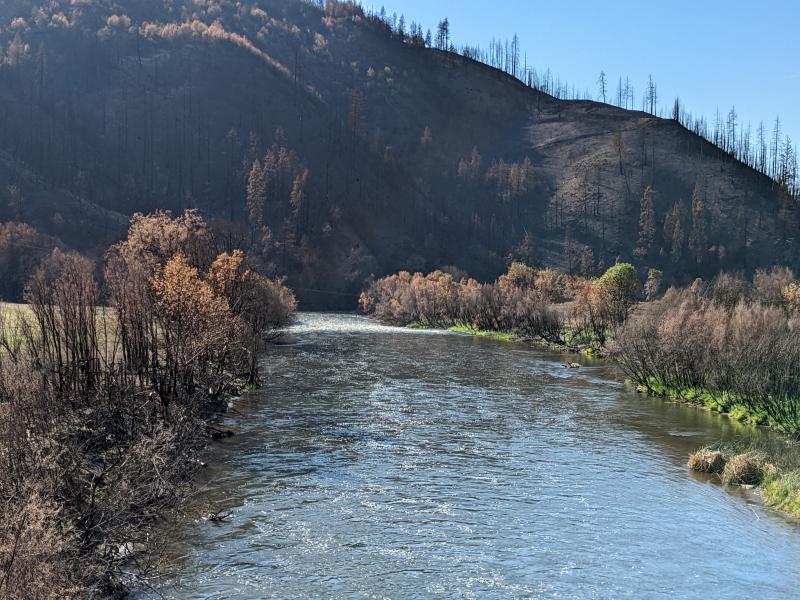
In recent decades, it has become increasingly clear that the West suffers simultaneously from too much fire and not enough. Fire exclusion has created vulnerable landscapes, far departed from the fire regimes through which they evolved. Losses are multifaceted: unprecedented high-severity fire is causing widespread habitat loss, while other systems wither in the absence of needed fire. Meanwhile, fire suppression activities pose a different set of threats, adding insult to injury for aquatic habitats and species. However, the two disciplines remain mostly siloed, with few opportunities to find shared value or to innovate together in management and policy efforts.
Over the last three years, we have hosted Fish & Fire workshops at each SRF conference. These workshops have met with increasing interest and momentum, focusing on the many intersections–ecological, cultural, and spatial–across fish and fire. This workshop will continue to build on that understanding, further exploring cross-disciplinary connections, identifying management implications and research needs, daylighting potential synergies in policy and action, and furthering the potential for beneficial fire to be incorporated into restoration efforts.
Fish & Fire 2026 Keynote Address, Ron Reed, Karuk Tribe
Fish and Fire – Key Past Workshop Insights, Josh Smith and Lenya Quinn-Davidson, Watershed Research and Training Center and UC ANR Fire Network
Metals in Wildfire Suppressants, Daniel L. McCurry, Ph.D., University of Southern California
The Potential of Ecological Remediation for Post-Fire Soil Cleanup, Danielle Stevenson, Ph.D., Centre for Applied Ecological Remediation
Integrating Process-Based Restoration into Post-Fire Emergency Response Efforts, Gabrielle Bohlman, US Forest Service
Connecting Instream and Upslope Restoration in the Western Klamath Mountains, Will Harling, Mid Klamath Watershed Council
Fuels To Flows: Bringing Nature-Based Stewardship to the Headwaters, Brock Dolman, Occidental Arts and Ecology Center
Temporal Habitat Changes and Related Fish Response following Catastrophic/Landscape-Level Fires: Accounting for Impacts When Prioritizing Restoration Need and Location, and Fish Population Estimation(s), Patricia Bratcher, U.S. Fish and Wildlife Service
Riverscape Restoration – Habitat Resilience in the Face of Wildfire Along Whychus Creek, Central Oregon, Mathias Perle, Upper Deschutes Watershed Council