The California Bond Freeze and How the Stop Work Order Affects the Restoration Field

2009_summer_gobernadorcreek.jpg
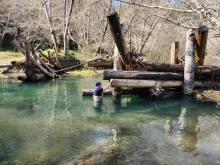
A barrier to steelhead migration on Gobernador Creek, Santa Barbara County, this project has been slated for removal. However, funding from DFG is on hold until further notice. This is the last barrier to migration in this system, its removal will open up approximately 1.75 miles. (Photo: courtesy South Coast Habitat Restoration archives)

On December 17, 2008, California’s Pooled Money Investment Board (PMIB) voted to freeze $3.8 billion in payments to projects receiving state bond funds, bringing hundreds of environmental projects across the state to a grinding halt. The move was prompted by the state budget stalemate and the global credit crunch, which conspired to lock California out of the bond market.

Two months later the Legislature passed a revised budget, yet the bond freeze continued. Across the state, environmental groups have been forced to let go of staff or close their doors completely. In March, State Treasurer Bill Lockyer successfully sold $6.5 billion in General Obligation (GO) bonds in the open market. This was enough to start paying back invoices to groups that had submitted them prior to the freeze and to fund some projects that were deemed high priority. However, in mid-April there was a Build America Bond (BAB) sale, and the Resources Agency, its 20 departments, and the Office of the Treasurer decided not to pay out funds from the March sale alone but to go through the process of vetting and fitting projects to funding source with both sales at once.

Proposition funding will be distributed starting with the earlier California propositions that were passed, and are still providing funding for California conservation and public works projects. Proposition 12 is now done and the requisite departments will start the process of paying bills and starting up frozen projects. Now projects funded through Propositions 40, 50 and 84 can utilize the template created for the dispersal of Prop 12 funds, which should greatly expedite the rest of the process.

Summary of Current Watershed Bills

Assembly Bill 1364 (Evans) and Senate Bill 553 (Wiggins) were born from the ongoing bond freeze and issues relating to frozen grants and contracts, how and when the state applies prompt payment, and who or what is truly eligible for both prompt payment and late payment penalties. These important measures seek to address these following concerns:

SB 553 will create equity for all nonprofits in eligibility for late payments under the Prompt Payment Act. The bill will provide that contracts are statutorily recognized under the Act, and remove outdated, restrictive language that solely excludes nonprofits from late payment penalties when the State does not have a signed budget, and when nonprofit contracts exceed $500,000.

AB 1364 will simply codify that all contracts and grant agreements executed prior to the freeze are considered valid agreements in the eyes of the State; and provide all state agencies and departments with statutory authority to amend frozen contracts and grant agreements as needed. Given the vast amount of contracts and grant agreements that could expire over the next several months, this bill is needed to ensure the integrity of those agreements, and provide state partners necessary flexibility to amend terms on deliverables and timelines that may not be met, through no fault to the grant recipient or contractor.

AB 1520 (State Watersheds)— Establishes the Statewide Watershed Program as a mechanism to provide assistance and funds to community-based efforts in the conservation, protection, and restoration of the state’s watersheds and to promote coordinated management of watersheds. It would also create a State Watershed Advisory Committee to provide additional assistance in the establishment, administration, or operation of the program.